Victorian Shakudo Pendant
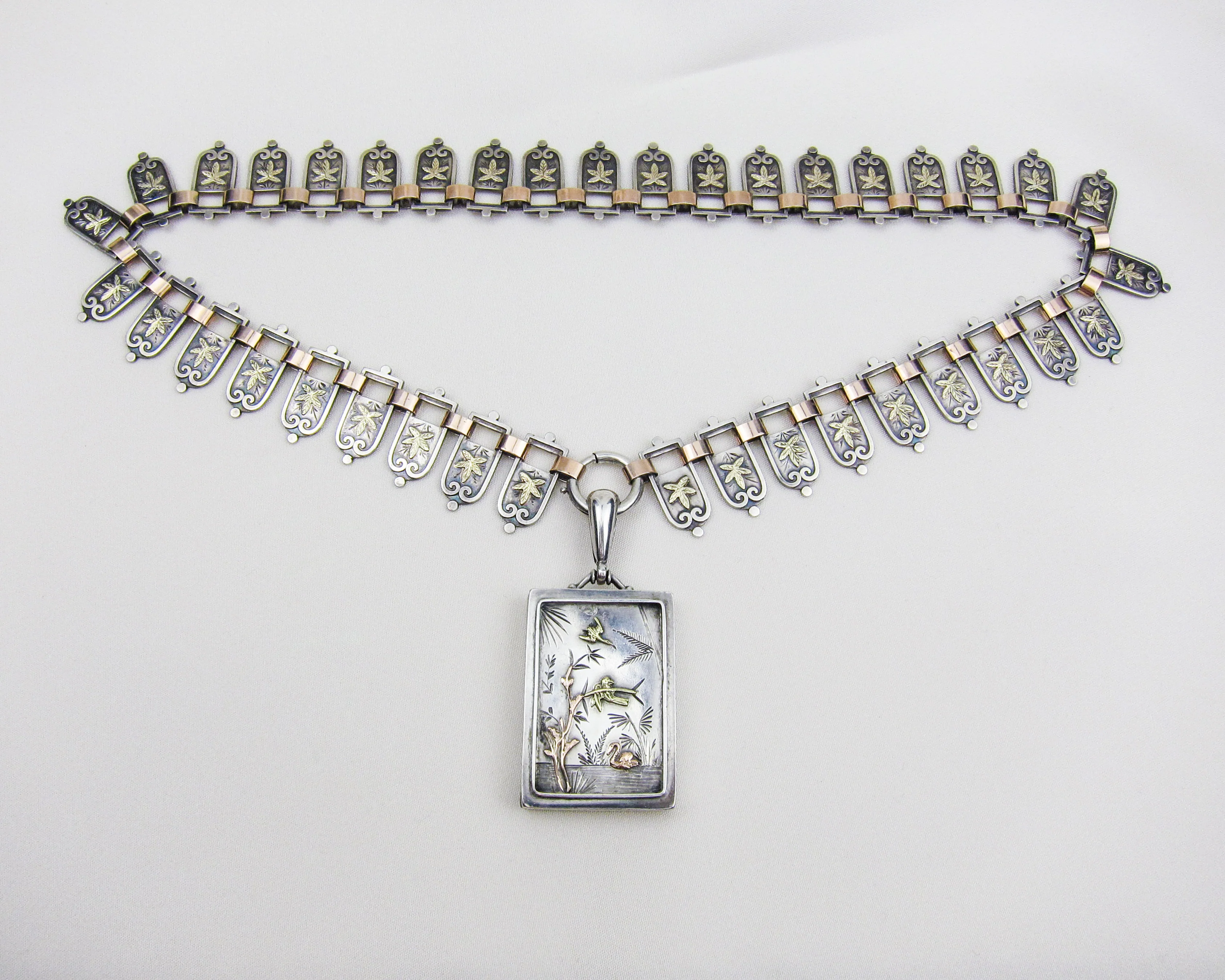
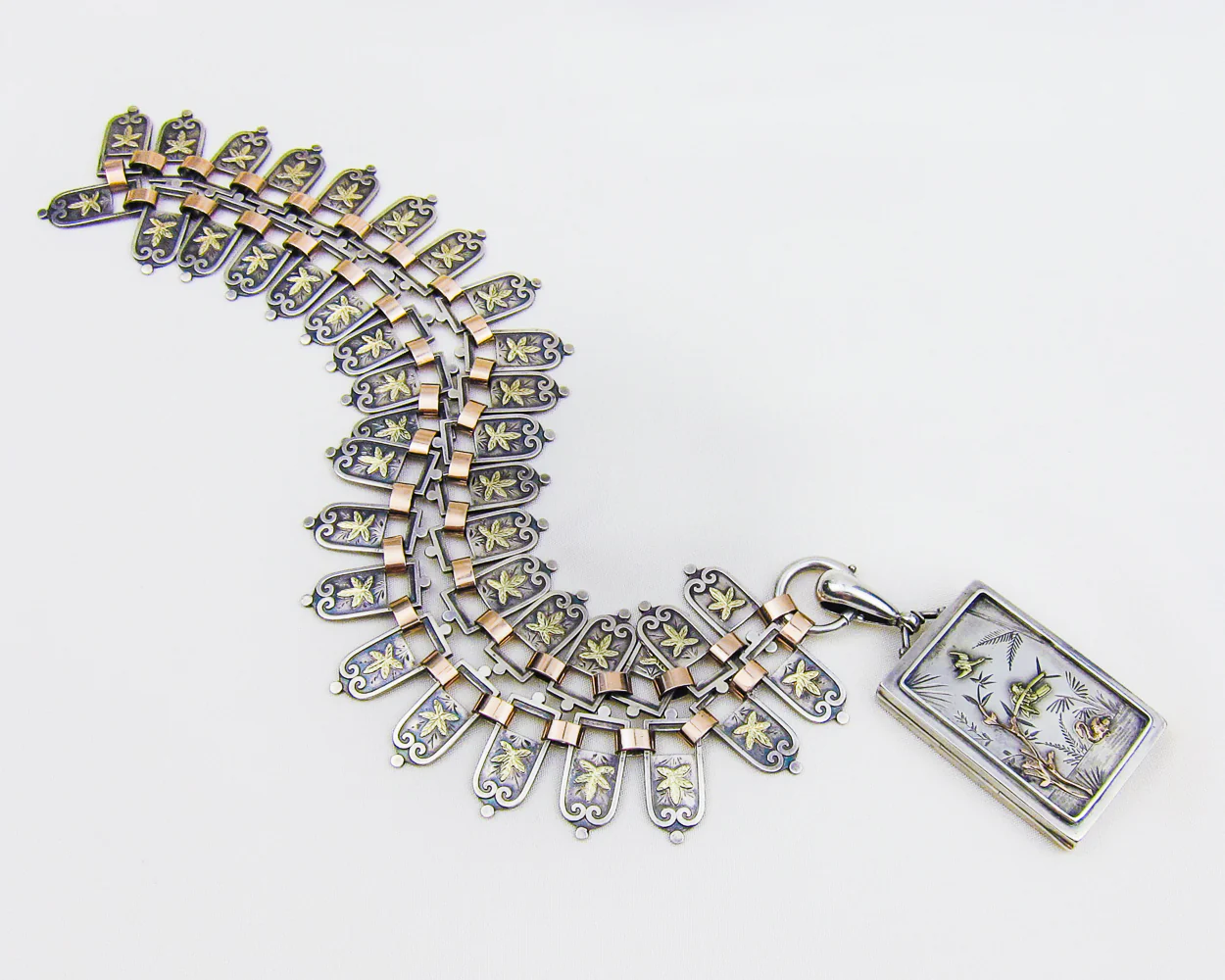
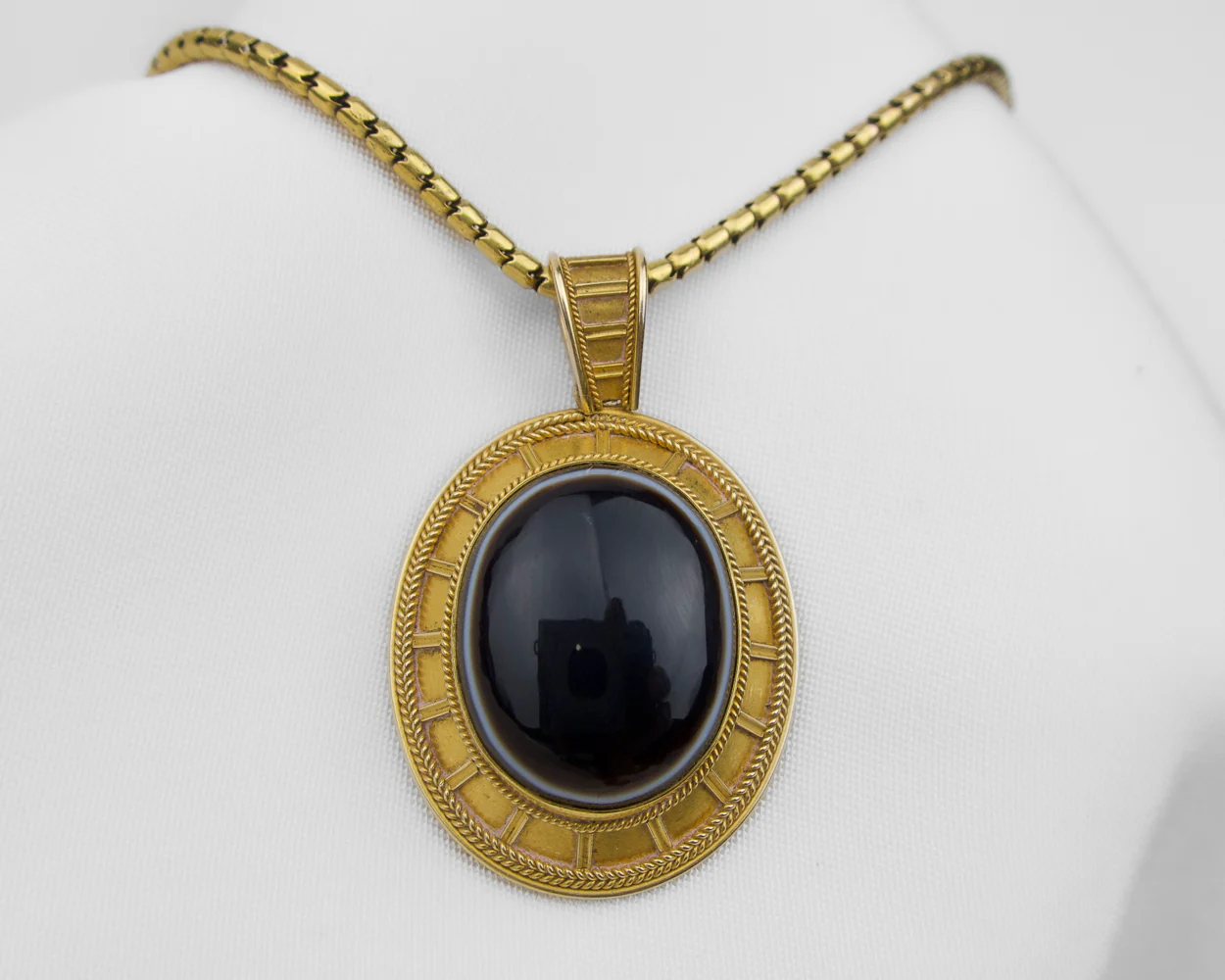
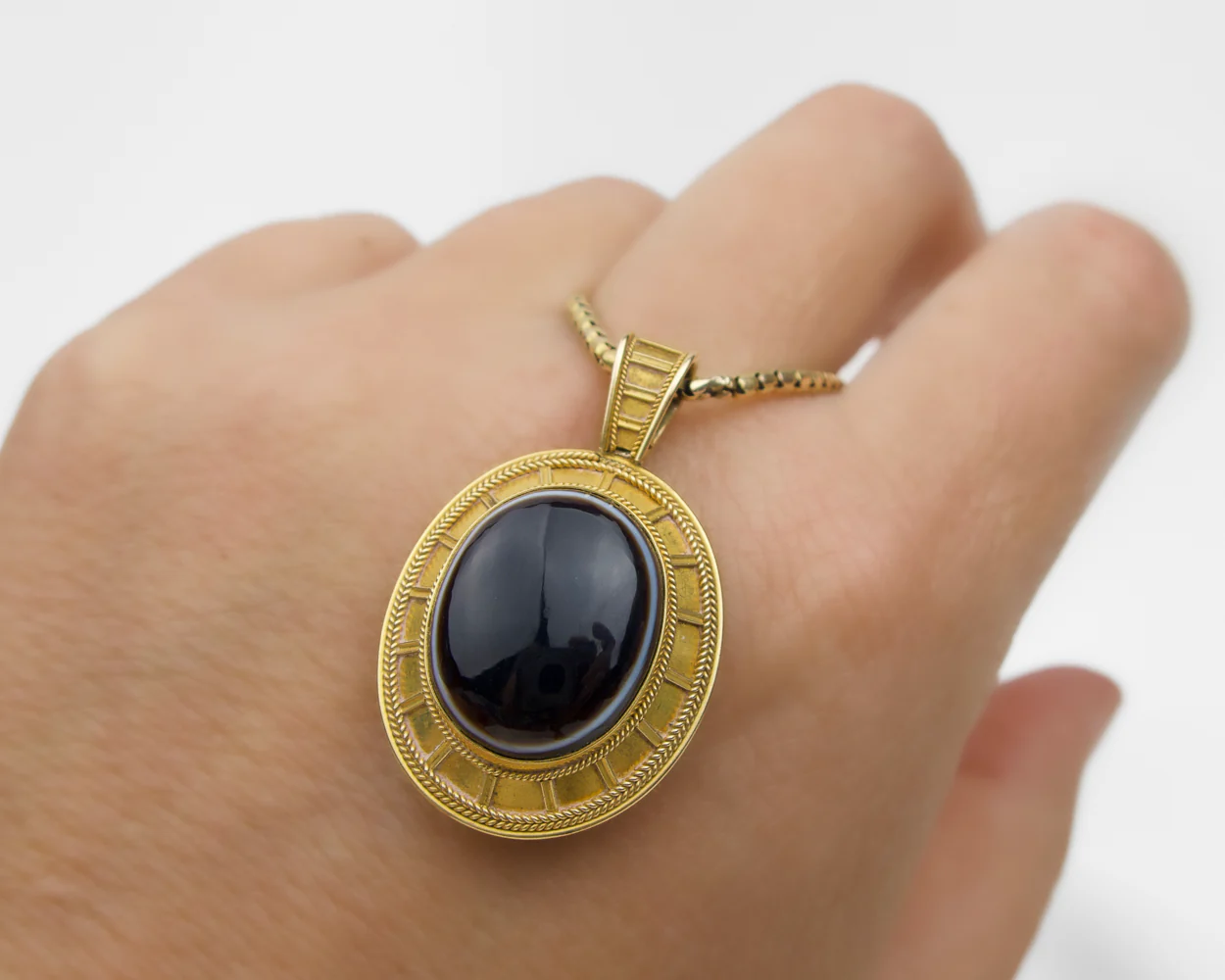
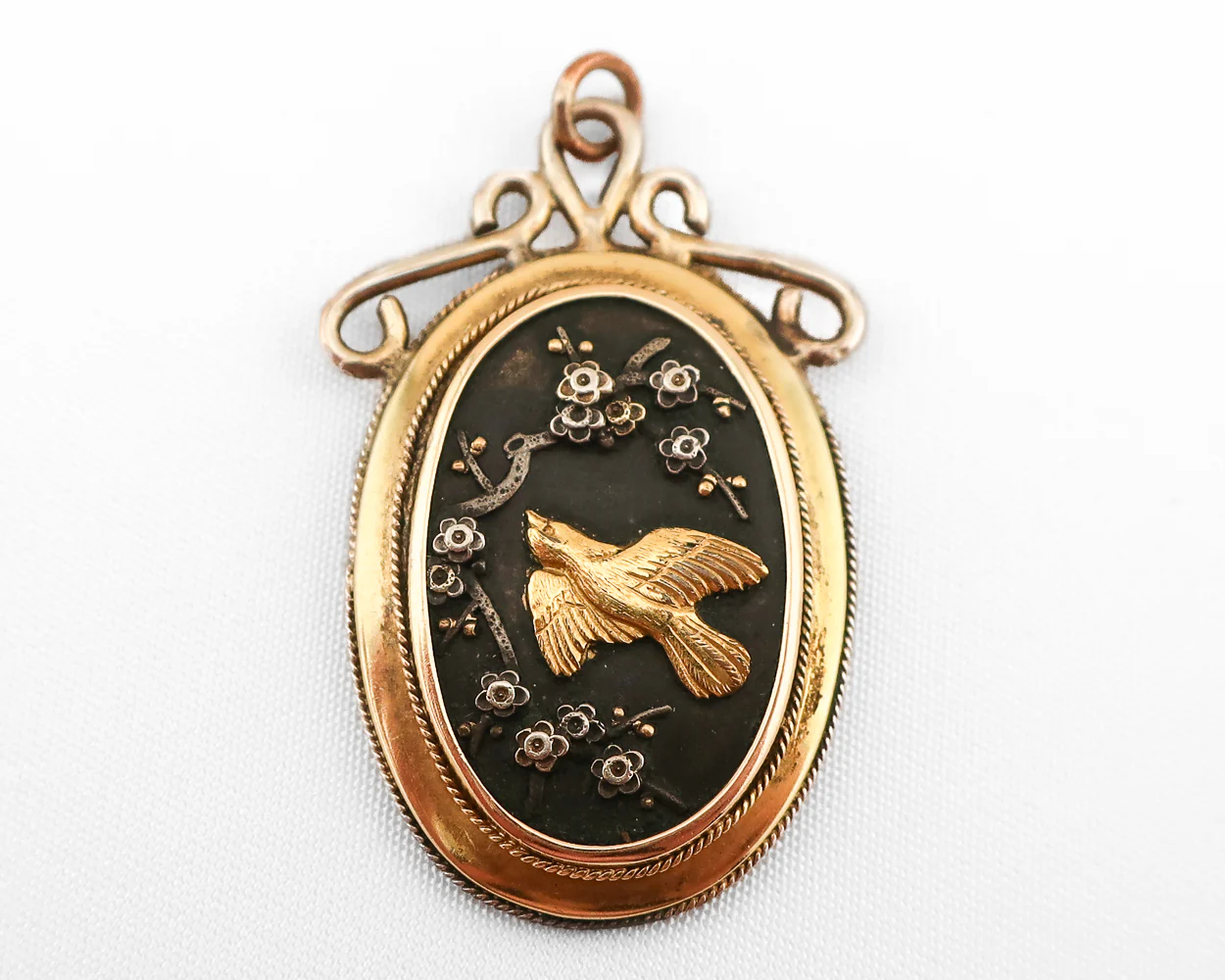
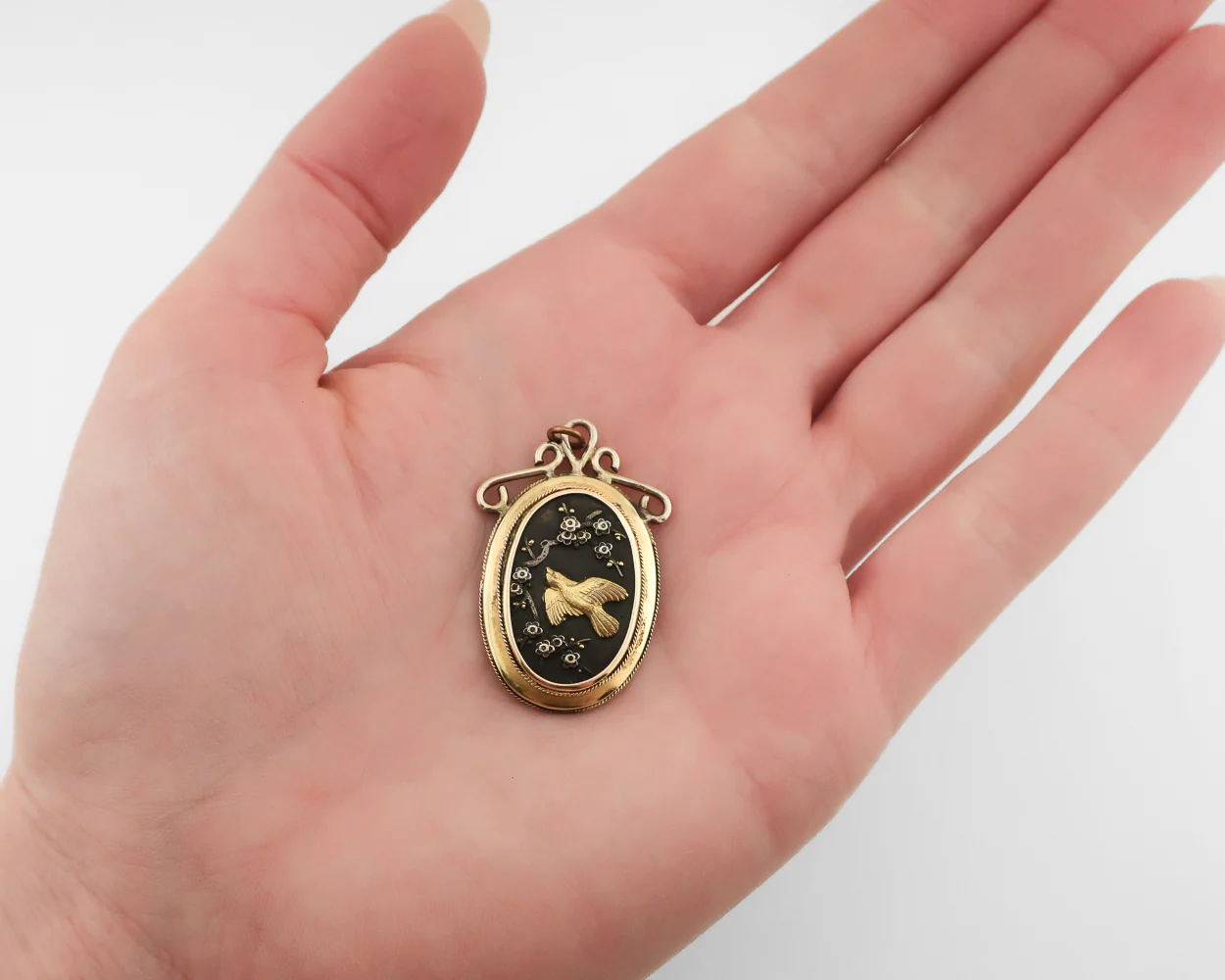
Circa 1860. A poetic study in contrast and craftsmanship, this 15KT gold Japanese shakudō pendant captures a moment of quiet movement—a graceful swallow captured in a dynamic, swooping mid-flight among delicately blossoming branches.
The upside-down swallow is an intentional artistic choice that conveys movement and life rather than a static pose. Japanese design (especially in shakudō and sword fittings) often favored asymmetry and motion over rigid orientation
The asymmetrical composition and naturalistic subject evoke the influence of Edo- and Meiji-period artistry, in which nature was observed with both precision and poetic restraint.
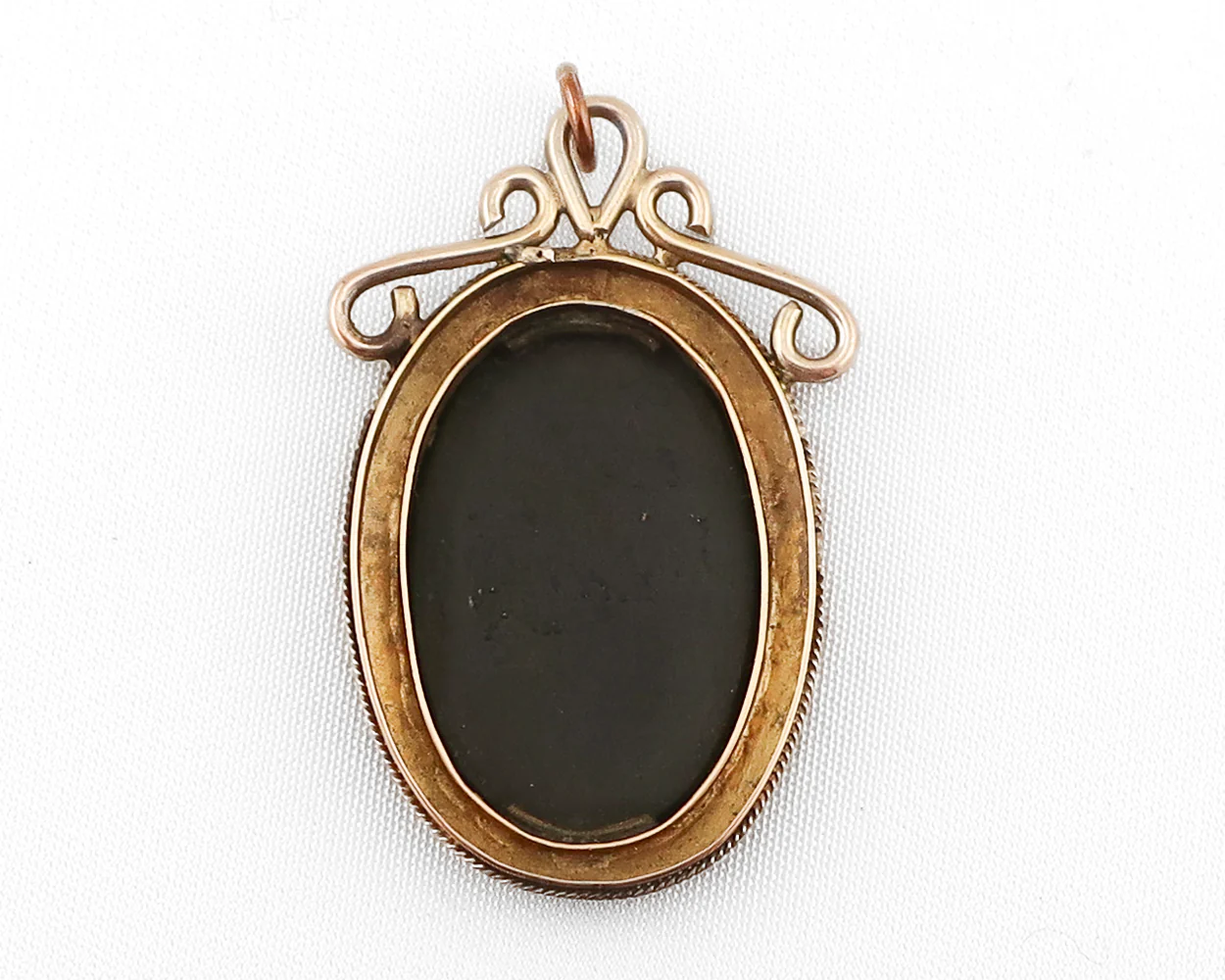
The plaque is framed in a 15KT gold mount with a decorative bail, likely adapted for Western wear in the late 19th century—a beautiful example of cross-cultural design during a period when Japanese art deeply influenced European taste.
Product Information
Product Information
Shipping & Returns
Shipping & Returns
Victorian Shakudo Pendant
Victorian Shakudo Pendant
Circa 1860. A poetic study in contrast and craftsmanship, this 15KT gold Japanese shakudō pendant captures a moment of quiet movement—a graceful swallow captured in a dynamic, swooping mid-flight among delicately blossoming branches.
The upside-down swallow is an intentional artistic choice that conveys movement and life rather than a static pose. Japanese design (especially in shakudō and sword fittings) often favored asymmetry and motion over rigid orientation
The asymmetrical composition and naturalistic subject evoke the influence of Edo- and Meiji-period artistry, in which nature was observed with both precision and poetic restraint.
The plaque is framed in a 15KT gold mount with a decorative bail, likely adapted for Western wear in the late 19th century—a beautiful example of cross-cultural design during a period when Japanese art deeply influenced European taste.
Original: $2,400.00
-65%$2,400.00
$840.00Product Information
Product Information
Shipping & Returns
Shipping & Returns
Description
Circa 1860. A poetic study in contrast and craftsmanship, this 15KT gold Japanese shakudō pendant captures a moment of quiet movement—a graceful swallow captured in a dynamic, swooping mid-flight among delicately blossoming branches.
The upside-down swallow is an intentional artistic choice that conveys movement and life rather than a static pose. Japanese design (especially in shakudō and sword fittings) often favored asymmetry and motion over rigid orientation
The asymmetrical composition and naturalistic subject evoke the influence of Edo- and Meiji-period artistry, in which nature was observed with both precision and poetic restraint.
The plaque is framed in a 15KT gold mount with a decorative bail, likely adapted for Western wear in the late 19th century—a beautiful example of cross-cultural design during a period when Japanese art deeply influenced European taste.